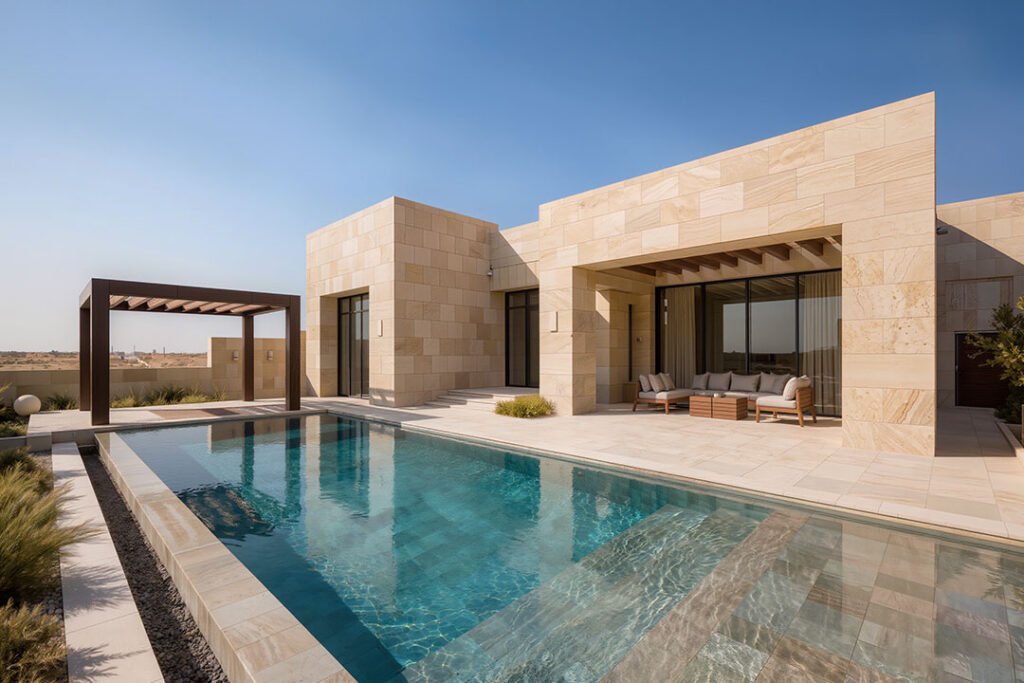
A swimming pool may look exactly as it did the day before on a summer morning…
Crystal-clear water, a calm surface, and a design that maintains its beauty under the sunlight.
But behind this scene, changes are taking place that are not always easy to see.
As temperatures rise, the water begins to respond to the surrounding conditions, and the requirements for pool operation and maintenance begin to change.
In a city like Riyadh, where temperatures rise significantly during the summer months, it is not enough to design a swimming pool that looks beautiful under the sun…
We must also consider how it performs under its effects.
Heat Changes More Than How the Water Feels
When air temperatures rise, swimming pool water temperatures are influenced by the intensity of sunlight, site conditions, water depth, and the surrounding environment.
The water may become warmer than the ideal temperature for comfortable swimming, particularly during the hottest periods of summer.
However, the effects of heat extend beyond how swimmers feel.
Higher water temperatures can increase maintenance requirements, influence certain aspects of water chemistry, and create conditions more favorable for algae growth if proper treatment levels are not maintained.
For this reason, controlling water temperature and monitoring water quality are not simply additional considerations…
They are part of maintaining a comfortable and consistent swimming experience.
Water Evaporates… Even When No One Is Using the Pool
You may notice a gradual drop in the water level, even when there is no visible leak or heavy pool usage.
The reason may be simple: evaporation.
Water naturally loses some of its volume to the atmosphere, and the rate of evaporation is influenced by water temperature, air humidity, wind movement, and the area of exposed water surface.
In hot, dry conditions, this process can become more noticeable.
As the water level drops, it becomes increasingly important to replace the lost water appropriately, while considering operational requirements and the quality of the replacement water.
A swimming pool does not lose water only when it is being used… it may also lose water while remaining completely still.
Sunlight Also Affects What Keeps the Water Clear
Pool water may look crystal clear under the sunlight, but visual clarity does not necessarily mean its chemical balance is ideal.
Ultraviolet radiation can break down free chlorine in outdoor swimming pools, making it essential to monitor disinfectant levels and maintain them within appropriate ranges.
Higher temperatures, heavy usage, and surrounding environmental conditions can also influence water treatment requirements.
This is where regular testing of chlorine levels and pH becomes essential, alongside the proper use of treatment systems and chemicals according to technical recommendations.
The objective is not to add more chemicals without careful consideration…
It is to maintain a balanced approach that supports effective disinfection and water safety.
Do Pool Systems Operate the Same Way Throughout the Year?
A swimming pool’s design may remain unchanged, but its operating conditions do not.
During summer, water temperatures change, evaporation rates may vary, and usage loads, filtration needs, and treatment requirements may also differ.
Therefore, operating settings should reflect the pool’s actual needs rather than following a fixed schedule that does not account for changing conditions.
This includes reviewing pump operating hours, water circulation rates, filtration performance, and treatment systems according to the system’s design, testing results, and usage requirements.
This does not necessarily mean running the equipment for as long as possible.
It means operating every component at the appropriate efficiency, at the appropriate time.
Shade Is More Than an Aesthetic Feature
When planning the areas surrounding a swimming pool, pergolas, trees, and architectural features may primarily be intended to create more comfortable seating areas.
But shade has another important role to consider.
Thoughtfully designed shading can help limit solar heat gain in pool water and improve user comfort during certain times of the day.
Pool covers, when appropriately selected and used, may also help reduce evaporation, although the potential of certain cover types to retain heat must be taken into account.
For this reason, there is no single solution that suits every swimming pool.
The right choice depends on the nature of the project, how the pool will be used, its location, and its water temperature control requirements.
When Does a Falling Water Level Require Investigation?
Evaporation is a natural process, but it does not explain every decrease in water level.
If water loss becomes unusual compared with the weather conditions and normal operation, or is accompanied by other signs such as water collecting outside the pool or frequent, unexplained refilling, a professional inspection may be necessary.
Distinguishing between normal water loss and a potential leak helps prevent inaccurate maintenance decisions.
Good monitoring is not simply about noticing a problem after it becomes serious…
It is about understanding what is normal under the pool’s operating conditions and what requires attention.
Good Design Prepares for Summer Before It Arrives
In regions with hot climates, preparing for summer does not begin when temperatures rise.<br/>It begins during the project planning stage.
Selecting suitable systems, planning water circulation, evaluating temperature-control options, and ensuring convenient access to equipment for maintenance are all decisions that influence the pool’s ability to operate efficiently under different conditions.
The goal is not to install as much equipment as possible…
It is to select what the project genuinely needs, taking into account its characteristics, environment, and intended use.
At Safwaa Pools, we believe successful design does not end when a project is completed.
It extends to the quality of the experience the pool delivers during everyday use and throughout the changing seasons.
Conclusion
Under Riyadh’s sun, swimming pool water does not remain unaffected by its surroundings.
Heat, evaporation, sunlight, and operational requirements are constantly interacting, potentially influencing user comfort and system efficiency.
Understanding these factors helps us make more informed decisions, whether during design, operation, or maintenance.
Because a successful swimming pool is not designed merely to look beautiful under ideal conditions… but to maintain the quality of its experience as conditions change.
Safwaa Pools
We Design Experiences… Not Just Pools.